Precision Probiotics
Discover a new era in probiotic innovation


Rethinking probiotics: much more than gut modulators
Precision probiotics are strains of beneficial bacteria that are carefully selected and designed for use in a precise dosage to address a specific health need. Leverage the health benefits of precision probiotics for advanced dietary supplement innovation.
Known phenotype (trait)
Trigger specific, characterized mechanism(s) of action
Targeted and clinically tested health benefits
Obtained from natural sources
Understanding probiotic genera, species and strains
Lactiplantibacillus
Genus
Broader category of classification
plantarum
Species
Groups of probiotics within a genus that share common features.
KABP®–011
Strain
A further sub-classification express alphanumerically, these may have unique properties.
Precision probiotics – also known as next generation probiotics or
condition-specific probiotics – can interact with the gut microbiota directly
to maintain its homeostasis like traditional probiotics do.
Precision Probiotics Outperform Traditional Probiotics
‘Gut’ to know
Traditional (generic) probiotics | Precision probiotics | |
|---|---|---|
Modulates gut microbiome | Yes – maintains gut homeostasis | Yes – maintains gut homeostasis |
Health benefits | Non-specific (broad GI effectiveness) | Non-specific (broad GI effectiveness) and specific |
Mechanism of action | Difficult to document | At least one precise mechanism of action known* |
Dose | Higher dosage | Lower dosage |
Research approach | Top-down approach – Trial and error- based to identify health benefit | Bottom-up approach – Identify strain according to mechanism of action first, then clinically demonstrate strain’s health effect |
End product | One-size-fits-all, generic | Scientifically supported, condition- specific, tailored to individualized characteristics |
| Table 1: The difference between traditional generic probiotics and precision probiotics. | ||
* Precision probiotics have at least one identified mechanism of action. However, the end benefit observed following supplementation with a precision probiotic may be due to multiple mechanisms. For this reason, further research investigating a strain might identify more than one mechanism or more than one health benefit.
Myth-Busting Precision Probiotics
ProBiotic innovation with evidence
Genetically-modified probiotics are needed to progress the market
Myth #1
Some companies are turning to genomics to develop precision probiotics – but we don’t think this is necessary for dietary supplements. Why? Because the unique and specific characteristics of probiotics already exist in nature, waiting for their potential to be unlocked.
So, there are two choices – artificially insert a gene into a bacterium to achieve a desired functionality or find a bacterium that naturally possesses this function.

Making generalized claims about the benefits of precision probiotics will be challenging
Myth #2
Existing probiotic literature is notably variable. This is largely because studies focus on entire bacteria genera (like the Lactobacillus genus) or ‘total species,’ rather than specific strains. Consequently, some researchers are exploring countless strains with distinct mechanisms of action and varying health benefits, without differentiation.
Understanding the clinical benefits of precision probiotics is often considered a much more achievable result, as such research focuses on one specific strain, its mechanism of action and potential health effect.

Precision probiotics will surpass conventional probiotic solutions
Myth #3
Not true! There is a role for generic and precision probiotic products – because one supports general gut health and overall wellbeing, whereas the other is more targeted towards a specific health area.
That said, precision probiotics should be considered as an opportunity to evolve dietary supplement portfolios.

Precision probiotics can be found in nature. But they are rare.
These unique probiotic strains are inherently present in the natural world. But modern diets and lifestyles have decreased human exposure to these beneficial bacteria in many populations worldwide.
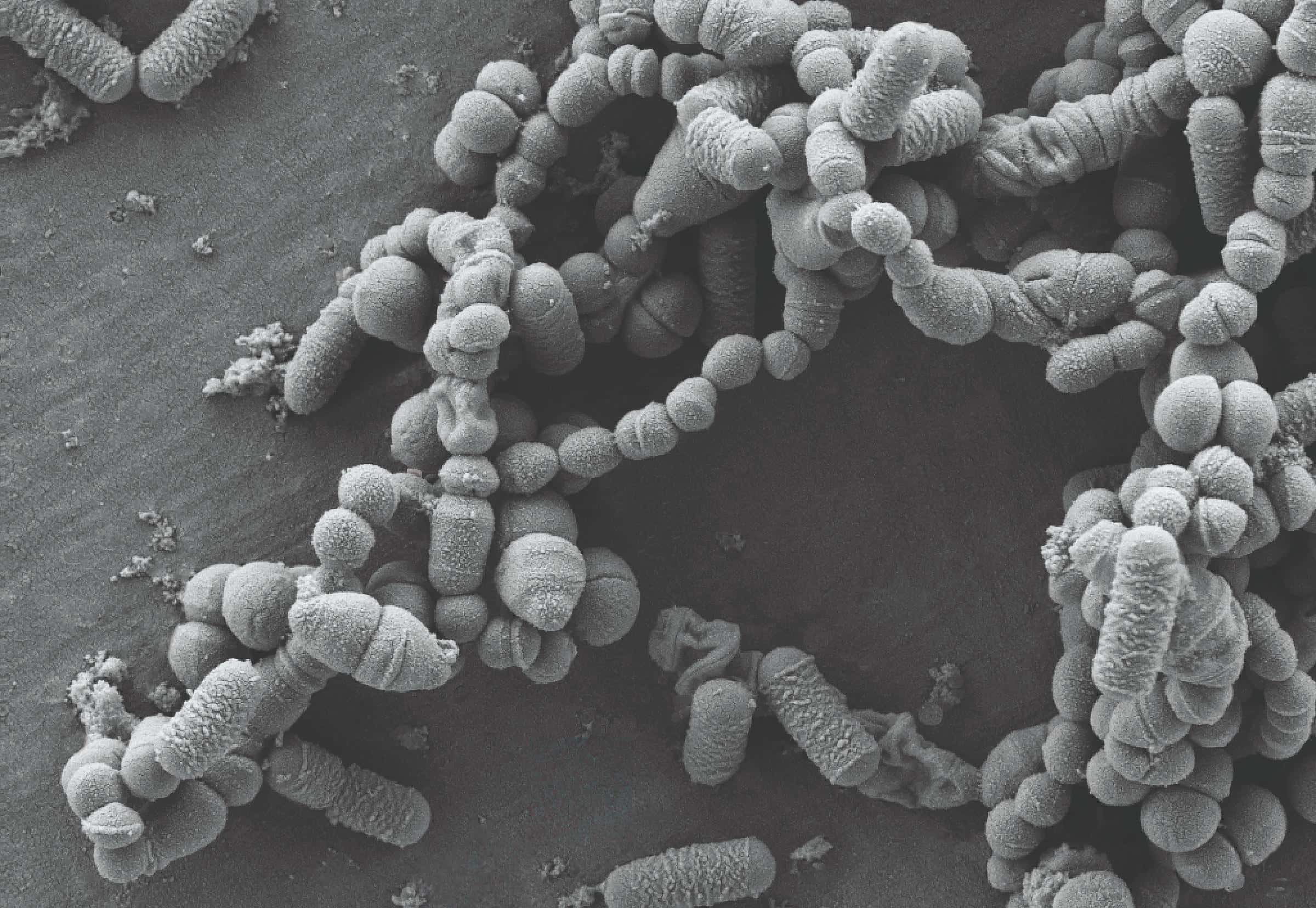
Kaneka Probiotics has tapped into precision probiotics in non-industrialized regions of the world to develop a patented bank of 1000-plus wild-type strains with the potential to develop probiotic supplements targeting specific health concerns.
Let's connect
Join the probiotic innovation movement with precision probiotics
Strains are meticulously selected based on specific mechanisms of action thought to be associated with particular health benefits
Bottom-up approach
1. Phenotypic screening: Target identification (cellular level)
2. In vitro phenotypic screening
3. Preclinical testing
4. Clinical trials
Precision probiotics
Explore some of the evidence behind these specific, targeted strains
Clinical Evidence

There is a growing bank of evidence demonstrating the exciting potential of precision probiotic solutions in several health areas – from digestion, to mood, general women’s health, skin and more17.
Gut-immune modulation
AB21® – Respiratory tract health probiotics
It has been shown to directly influence immune function via specific mechanisms of action. It contains a mix of four specifically selected probiotic strains (L. plantarum KABP® 033, P. acidilactici KABP® 021, L. plantarum KABP® 022 and L. plantarum KABP® 023) which bring a triple mechanism of action to improve the immune response and support respiratory health.
- Activates the immune system via an effect on immunity cells.17
- Enhances gut barrier function thanks to the production of
polyphosphates.18,19 - Supports a healthy inflammatory response via the production of acetylcholine and acetate.18

Gut-brain modulation
L. plantarum DR7® – Probiotics for stress and cognitive health
L. plantarum DR7® promotes a healthy stress response and can help reduce feelings of stress. It also helps support cognitive health, which may be associated with its modulating effect on the gut-brain axis.20,21
L. plantarum DR7® has been shown to increase the expression of key enzymes like tryptophan hydroxylase (TPH1), which convert tryptophan to serotonin. Serotonin is a neurotransmitter that is associated with positive mood. These findings will be used to inform future clinical studies.

Menopause support
Beyond the gut – A probiotic blend targeting menopause
A formulation containing the strain combination – Lactiplantibacillus plantarum KABP® 051, Levilactobacillus brevis KABP® 052 and Pediococcus acidilactici KABP® 021 – is specifically designed for estrogen modulation and menopause support.
This formulation has been shown to increase hormone levels, namely estradiol and estrone, in healthy, peri-menopausal women. Also, the inclusion of P. acidilactici KABP® 021brings general gut health benefits to the blend, delivering all-round support to women during this phase of their life.21

The efficacy of probiotics is not only related to the dose (or CFU count). The quality of the probiotic and efficacy at producing effector molecules – including its stability throughout shelflife – is the key here.
Inspire the next generation of probiotic solutions with Kaneka Probiotics
Probiotic solutions with Kaneka Probiotics
Ready to innovate with precision probiotics?
We are pioneers in microbiome science, with the tools, creativity and scientific minds to find and unlock the potential of precision probiotics in human health.

References
- Kaneka Probiotics. Brand Health Study, 2023.
- Coherent Market Insights. Next generation probiotics market analysis. 2023.
- Research and Markets. Probiotics market size, share & trends analysis report by product (food & beverages, dietary supplements), by ingredient (bacteria, yeast), by distribution channel, by end-use, by region, and segment forecasts, 2023 – 2030. report, 2023.
- Sniffen et al. Choosing an appropriate probiotic product for your patient: An evidence-based practical guide. PLoS ONE, 2018;13:e0209205.
- Leviatan et al. An expanded reference map of the human gut microbiome reveals hundreds of previously unknown species. Nat Commun., 2022;13(1):3863.
- Anderson and Bisanz. Challenges and opportunities of strain diversity in gut microbiome research. Frontiers in Microbiology, 2023;14:1117122.
- Frew. The hygiene hypothesis, old friends, and new genes. Front Immunol., 2019:10:388.
- 3Gem online survey (8 European countries on a total of 8000 consumers), 2023.
- Hill et al. Expert consensus document. The International Scientific Association for Probiotics and Prebiotics consensus statement on the scope and appropriate use of the term probiotic. Nat Rev Gastroenterol Hepatol.,2014;11(8):506-14.
- Hill et al. Expert consensus document. The International Scientific Association for Probiotics and Prebiotics consensus statement on the scope and appropriate use of the term probiotic. Nat Rev Gastroenterol Hepatol., 2014;11(8):506-14.
- Latif et al. Probiotics: mechanism of action, health benefits and their
application in food industries. Frontiers in Microbiology, 2023;14:1216674. - van Bokhorst-van de Veen et al. Congruent strain specific intestinal persistence of lactobacillus plantarum in an intestine-mimicking in vitro system and in human volunteers. PLoS ONE, 2021, 7(9): e44588.
- Vijay and Valdes. Role of the gut microbiome in chronic diseases: a narrative review. EJCN, 2022;76:489-501.
- Chen et al. Prevalence and relationship between allergic diseases and infectious diseases. J Microbiol Immunol Infect., 2001;34(1):57-62.
- Rook. Regulation of the immune system by biodiversity from the natural environment: an ecosystem service essential to health. Proc Natl Acad Sci U S A., 2013;110(46):18360-7.
- Frew. The hygiene hypothesis, old friends, and new genes. Front Immunol.,2019:10:388.
- Kaneka Probiotics. ASBMB Congress poster, April 2024.
- Pérez et al. Derived postbiotics of a multi-strain probiotic formula clinically validated for the treatment of irritable bowel syndrome. The FASEB Journal, 2020;34(1):1.
- Segawa et al. Probiotic-derived polyphosphate enhances the epithelial barrier function and maintains intestinal homeostasis through integrin–p38 MAPK pathway. PLoS ONE, 2011;6(8):e23278.
- Chong et al. Lactobacillus plantarum DR7 alleviates stress and anxiety in adults: a randomised, double-blind, placebo-controlled study. Benef Microbes, 2019;10(4):355-373.
- Liu et al. Lactobacillus plantarum DR7 modulated bowel movement and gut microbiota associated with dopamine and serotonin pathways in stressed adults. Beneficial Microbes, 2020;21(13)4608.
- Honda et al. Supplementation with a probiotic formula with β-glucuronidase activity increases serum estrogen levels in peri/post-menopausal women, 2024.