

The best probiotic for menopause is a clinically studied, strain-specific formulation like KABP® Menopause that supports estrogen metabolism through the gut microbiome, rather than a generic women’s health blend. For formulators, that distinction is the difference between a defensible product claim and a commoditized SKU.
The menopause supplement category is growing rapidly. Approximately 6,000 women enter menopause each day in the United States alone, and brands are racing to meet them. According to Grand View Research, the U.S. menopause market generated $5.56 billion in revenue in 2024 and is projected to reach $7.37 billion by 2030. More than 44% of newly launched menopause supplements between 2023 and 2025 incorporated probiotics, making it one of the fastest-growing formulation strategies in the category.
For supplement brands and formulators, that growth creates an opportunity, but only if the ingredient underneath can do what the label says. Generic “women’s wellness” blends with little more than Lactobacillus acidophilus and a claims sheet aren’t going to cut it anymore.
The Best Menopause Probiotic: KABP® Menopause
KABP® Menopause is a three-strain, clinically studied probiotic formulation developed specifically to support estrogen maintenance in healthy perimenopausal and menopausal women. What sets it apart is not just the clinical study, but the mechanism that was validated before the clinical trial was designed.
The Probiotic Strain Screening Process
Kaneka conducted an in vitro screening of more than 80 bacterial strains across 16 different probiotic species, specifically evaluating GUS enzyme activity. L. brevis KABP®-052 demonstrated the strongest ability to deconjugate estrogens among all strains evaluated, producing significantly higher levels of active estrogen and estradiol after just one hour of incubation.
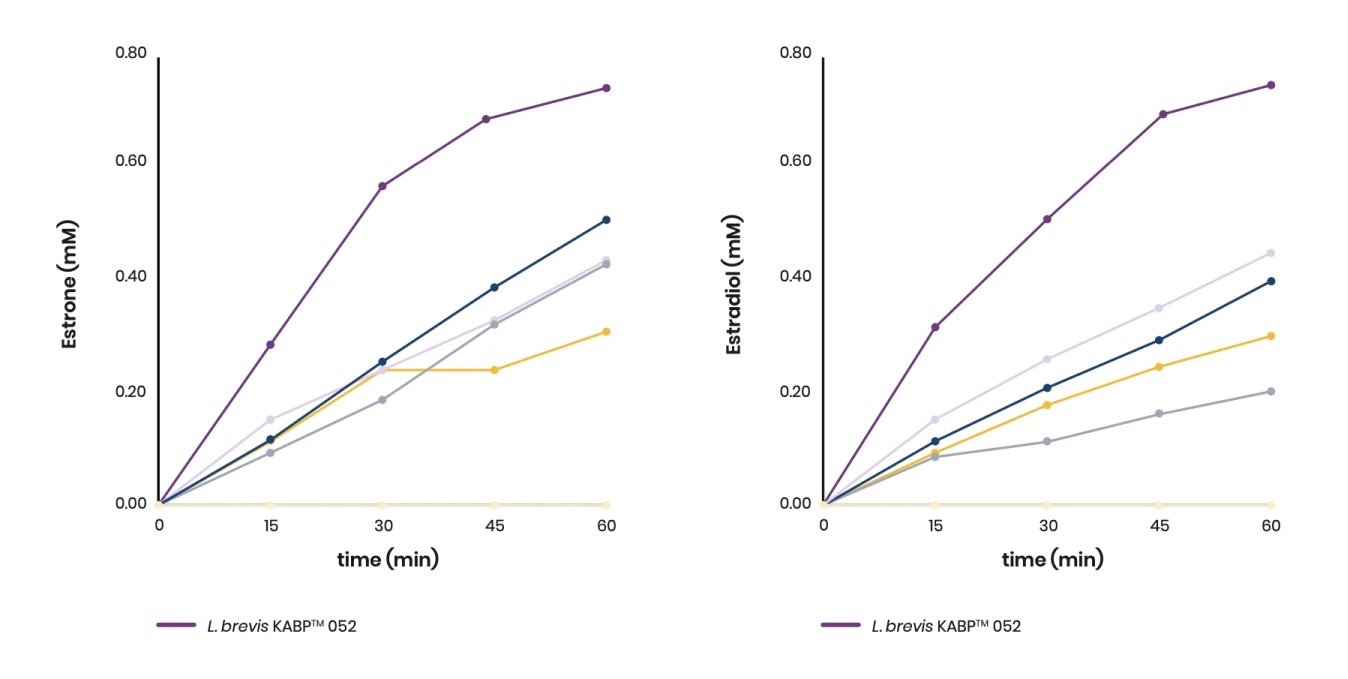
Estrone and Estradiol levels (mM) from 0 to 60 minutes
** Both groups experienced symptom relief
That screening process is what mechanism-driven formulation looks like. The clinical study followed the science, not the other way around.
The KABP® Menopause Three-Strain Formulation
KABP® Menopause combines three complementary strains at 1 billion CFU/dose:
- L. plantarum KABP®-051 — selected for microbiota balance support and broader women’s wellness applications.
- L. brevis KABP®-052 — the GUS-active strain identified in screening; the primary driver of estrogen reactivation in the formulation
- P. acidilactici KABP®-021 — contributes comprehensive gut health support, including digestive comfort and gut barrier function
The inclusion of P. acidilactici KABP® 021 is strategically significant because it brings validated gut health and GI support benefits to a women’s health application, broadening the product’s clinical story beyond hormonal support alone L. plantarum KABP®-051 has clinical data on gut-brain axis and weight management, areas also relevant for women’s health.
The Clinical Evidence
According to a randomized, double-blind, placebo-controlled study in 113 healthy Japanese women ages 45-55, one capsule of KABP® Menopause daily for 12 weeks was shown to reduce the decline in serum estrone (E1) and estradiol (E2) levels compared to placebo. At week 12, estrogen levels in the placebo group declined from the baseline, while the probiotic group maintained levels. This is a clinically meaningful finding for a non-hormonal intervention.
The formulation was recognized as a winner in ingredient innovation at the 2025 NutraIngredients Global and USA Awards—a distinction that validates its clinical positioning and market-ready science. KABP® Menopause has also been competitively selected to be presented at the Council for Responsible Nutrition’s Innovations Exchange.
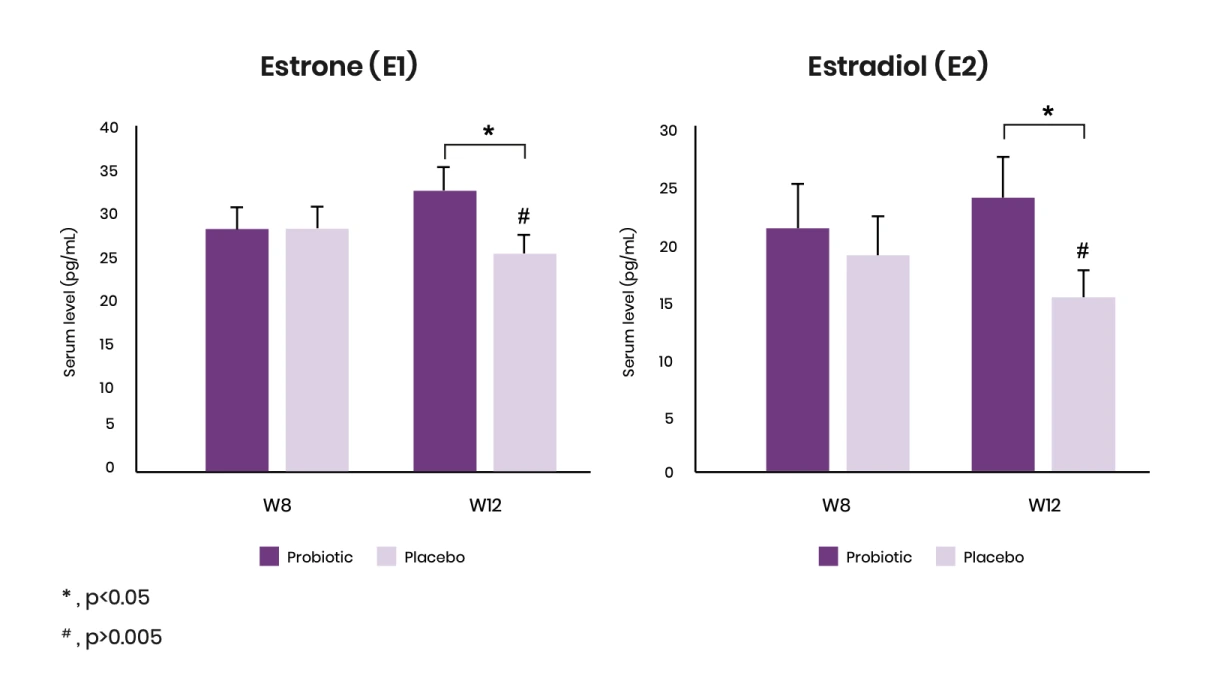
Chart showing the decline in estrogen levels after taking KABP® Menopause
What Is the Estrobolome? Why It Matters for Menopause Probiotic Formulations
The estrobolome is the collection of gut microbial genes capable of metabolizing estrogens. It’s the mechanism that links the gut microbiome to systemic estrogen levels, and it’s why probiotic science has become one of the more compelling areas of menopause research.
Here’s how it works: The liver deactivates estrogens and routes them toward elimination. In the gut, certain bacteria produce an enzyme called beta-glucuronidase (GUS) deconjugating estrogens and allowing them to be reabsorbed into the bloodstream. More functional GUS activity in the gut can imply more circulating estrogen.
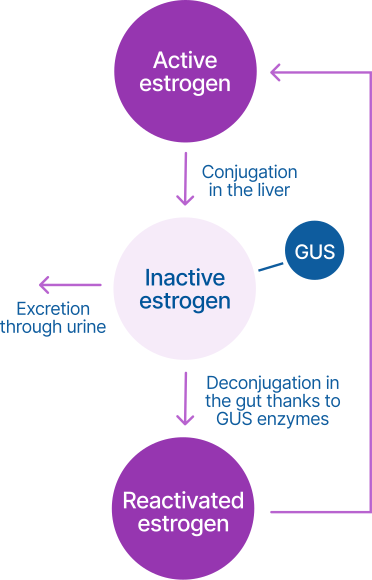
This graph shows how the gut microbiota regulates estrogen by reactivating it via GUS enzymes
Definition: Estrobolome
The subset of the gut microbiome that encodes beta-glucuronidase (GUS) enzymes capable of deconjugating estrogen metabolites, facilitating their reabsorption and contributing to the regulation of systemic estrogen levels.
According to research published in the Journal of Biological Chemistry, gut microbial GUS activity plays a central role in estrogen reactivation and homeostasis. During the menopausal transition, gut microbiota diversity declines, and with it so does functional GUS activity. The result is a measurable drop in reabsorbed, active estrogen.
For brands developing menopause-focused products, this mechanism is the scientific rationale that makes a probiotic formulation more than a trend play. It’s the foundation for defensible, mechanism-driven claims that regulatory teams look for.
Why Is “Strain-Specific” Clinical Data Important For Menopause Probiotics?
Strain-specific clinical data means a human clinical trial demonstrating that a particular strain (identified by genus, species, and strain designation) produces a measurable outcome in the target population. In the menopause category, that means showing an effect on estrogen levels, symptom markers, or microbiome composition in perimenopausal or menopausal women.
This is a higher bar than most probiotic ingredients can clear. Most ingredients in this space only rely on:
- Class-level evidence (studies on Lactobacillus genus broadly, not a specific strain)
- Surrogate endpoint data (in vitro findings not replicated in human trials)
- Extrapolated outcomes (general gut health claims applied to a women’s health context)
None of these support the kind of substantiated, mechanism-linked claims that differentiate a product in today’s market, or that satisfy the scrutiny of a sophisticated buyer.
Mechanism-Driven Menopause Probiotics vs. Generic Blends
Mechanism-driven formulations enable brands to substantiate claims in ways generic blends cannot: they provide a documented scientific rationale connecting the specific strains to measurable outcomes. For product developers and brand teams, this translates directly into three competitive advantages: claims substantiation that withstands regulatory scrutiny, faster commercialization timelines, and defensible market differentiation.
Three trends are driving this shift:
- Retailer and buyer sophistication: Functional nutrition buyers are increasingly asking for the clinical study, not just the GRAS status.
- Consumer education: End-market consumers are asking how a product works, pushing brands upstream to demand more from their ingredient suppliers.
- Regulatory pressure: With the FTC and FDA increasing scrutiny of structure/function claims, brands that can trace a claim back to a human clinical trial on the exact strain in their formula are in a much better position.
Generic blends, or multiple strains with no unified mechanism or shared clinical data, leave brands exposed on all three fronts.
What to Look for In a Clinically Substantiated Menopause Probiotic Ingredient
When sourcing ingredients for menopause formulations, brand developers should prioritize strain-level clinical evidence, documented mechanisms of action, formulation compatibility, and supplier-level support for claims and regulatory documentation.
Use this framework to differentiate clinically backed solutions from commodity ingredients:
| Evaluation Criterion | What to Ask Your Supplier |
| Strain-specific identity | What is the full taxonomic designation (genus, species, strain ID)? |
| Human clinical trial | Has this exact strain/formulation been tested in the target population? |
| Mechanism of action | What biological pathways does this strain act on? |
| Endpoint relevance | Were hormonal endpoints (e.g., estrone, estradiol) measured? |
| Study design quality | Was the trial randomized, double-blind, and placebo-controlled? |
| Claims substantiation support | Can the supplier provide dossiers for regulatory review? |
| Stability data | What is the validated shelf life and storage requirement? |
| Delivery format capability | What formats (capsule, stick pack, etc.) maintain CFU viability? |
For a deeper look at what separates precision probiotic ingredients from commodity strains see our guide to strain-specific probiotic science.
Developing a Menopause Product? Kaneka Provides Faster Time-to-Market
Whether you’re launching your first menopause SKU or upgrading an existing formula with stronger clinical backing, Kaneka’s strain-specific KABP® Menopause solution provides the clinical evidence, regulatory support, and formulation expertise brands need to commercialize faster and with reduced compliance risk. Connect with our technical team to discuss your formulation requirements.
Frequently Asked Questions About Menopause Probiotics
Do probiotics help with menopause symptoms?
A study awaiting publication found the KABP® Menopause probiotic formulation to reduce symptoms associated with menopause such as hot flashes. Honda et al is our pilot study, which showed the probiotics MoA works in humans. It showed us that the probiotic does indeed reduce the decline in serum estrone and estradiol.
Should you take probiotics during menopause?
From a formulation standpoint, the scientific rationale is clear: menopause is associated with a measurable decline in gut microbiome diversity, which directly affects GUS enzyme activity and estrogen metabolism. Targeted probiotic supplementation during this life stage addresses a documented biological gap.
What probiotic strains are used in menopause formulations?
Clinically studied menopause probiotic formulations typically include strains selected for GUS activity, microbiota balance, and complementary gut health support. KABP® Menopause combines L. plantarum KABP® 051, L. brevis KABP® 052, and P. acidilactici KABP® 021 — each selected through a screening process of more than 80 strains across 16 probiotic species, with L. brevis KABP® 052 identified for its superior estrogen-reactivating GUS activity.
What is the difference between a precision probiotic and generic probiotic blend?
A precision probiotic is built around a specific, documented mechanism of action and validated through strain-level human clinical research. A generic blend typically combines commonly used strains without shared clinical evidence or a defined biological pathway. For brands, that distinction is commercial, not just scientific: precision probiotics support defensible claims, differentiated positioning, and reduced regulatory risk, while generic blends leave you exposed on all three fronts.
Can probiotics help with estrogen?
Yes, through a specific mechanism involving the estrobolome. Gut bacteria that produce beta-glucuronidase (GUS) enzymes can deconjugate estrogen metabolites in the gut, allowing active estrogens to be reabsorbed into the bloodstream. L. brevis KABP® 052, a key strain in KABP® Menopause, was selected specifically for its high GUS activity. A clinical study found the full KABP® Menopause formulation reduced the decline in serum estrone and estradiol levels compared to placebo over 12 weeks.
Can you take menopause probiotics every day?
Daily use is the standard dosing approach across clinically studied probiotic formulations, including KABP® Menopause, which was evaluated at one capsule per day over 12 weeks in its pivotal clinical trial. For formulators, daily dosing also simplifies consumer communication and supports compliance.